
Wand for enterprise

Build the company
you could become.

Your ambition deserves more capacity. Wand brings autonomous AI workers into the structure of your business—with continuing responsibilities, connected systems, and an operating model shared with people.

From a processTo a functionTo a new operating model

01 / Organize around outcomes

Responsibility is
the starting point.

A reconciliation must close. A research view must stay current. A case must move from intake to resolution. These are continuing responsibilities, with dependencies, exceptions, and consequences.

Give an AI worker a defined outcome, the context to pursue it, and the authority to act. Then manage the work as part of your organization.

The worker

A responsibility with an owner.

Give a worker a recurring mandate, such as closing exceptions or keeping research current. Its obligations remain visible across assignments, so the business can manage the work through to an accepted result.

Inside Wand Agents

The organization

A common foundation.

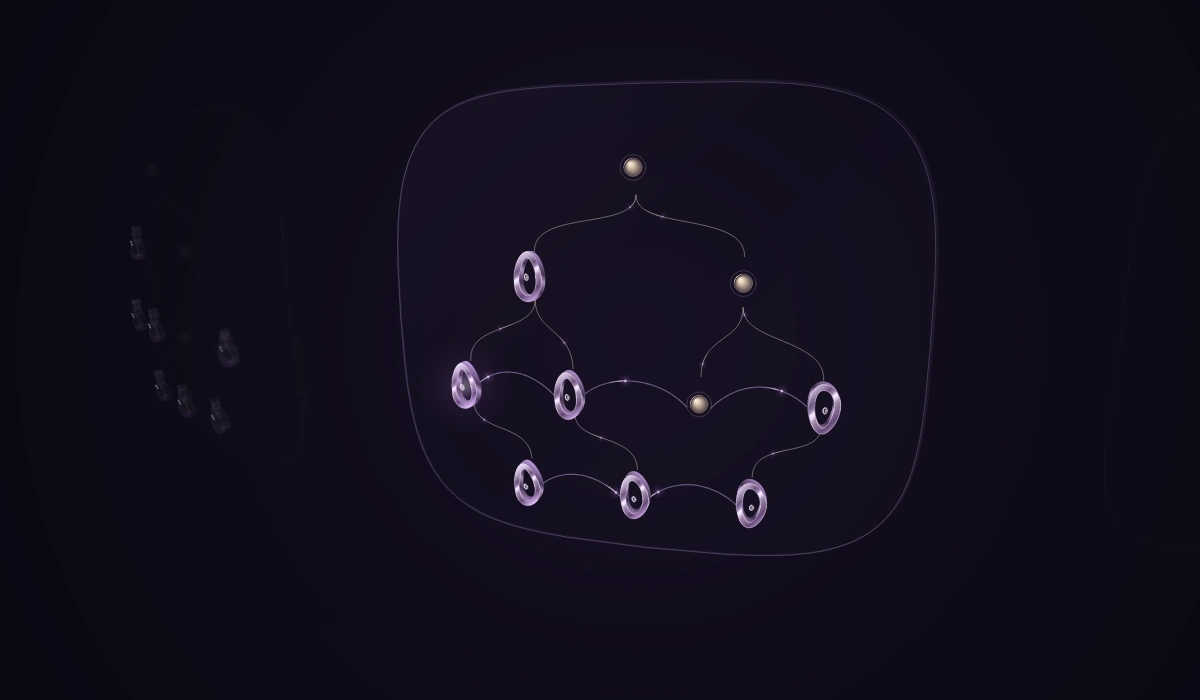
Wand Registry is the shared record for people and agents. Wand Teams connects their work into shared processes. Wand Governance brings policies, objectives, and capability gaps for both into the same operating picture.

Explore Wand OS

02 / The work, made concrete

Own the process.
Carry it through.

Follow each responsibility through its signals, decisions, and outcomes. Each example shows how a worker operates inside a business process.

Illustrative workflows. Systems, authority, and measures are configured for each organization.

01 / Finance operations

Keep the close moving.

A new statement arrives. The worker gathers approved records, compares transactions, investigates discrepancies, and prepares the next action. Missing evidence becomes a request to the responsible colleague; an unresolved adjustment goes to the relevant authority.

  1. SignalStatement received
  2. InvestigationRecords and exceptions
  3. DecisionResolve or seek approval
  4. OutcomeVerified, traceable close

Measure the process: reconciliation quality, exception age, review effort, and completed work.

02 / Research and analysis

Keep a decision informed.

A worker follows a defined research mandate: gather approved evidence, examine competing explanations, document assumptions, and update the view when material information changes. Colleagues can inspect its sources, challenge its reasoning, and decide what follows.

  1. SignalMaterial information changes
  2. InvestigationSources and assumptions
  3. DecisionReview the changed view
  4. OutcomeA current, sourced analysis

Measure the process: evidence quality, coverage, timeliness, and usefulness to the decision-maker.

03 / Document and compliance operations

Move the case forward.

Documents arrive across systems. The worker extracts and checks information, applies the assigned policy, identifies missing material, and coordinates the next step. An unusual case stays attached to its evidence and decision history when another worker takes over.

  1. SignalA case enters the queue
  2. InvestigationDocuments and policy
  3. DecisionProgress or escalate
  4. OutcomeA resolved, auditable case

Measure the process: case completion, exception quality, turnaround, and policy adherence.

03 / Work across the business

The outcome crosses
systems. So should
the workforce.

Real operations move through documents, records, applications, and people. Wand coordinates work across approved systems while preserving the context needed to carry an assignment through.

Connections follow the organization’s deployment and access design. A worker receives the systems and data required for its role; activity stays connected to a mandate and an accountable owner.

One responsibility / Reconciliation
EPEmily Parker · Finance leadDefine the outcome.Mandate & authority
The original metallic oval representing a Wand autonomous worker
Receiving the mandate

Reconciliation agent

Identity · Memory · Authority

JWJames Wilson · Review ownerApprove the exception.Evidence & accountability
Bank statementsEnterprise ledgerCase queue

A mandate becomes work.

The finance lead assigns the outcome. The worker receives the scope, approved systems, and authority to begin.

Illustrative operating sequence. People and agents can hold action or review responsibilities under the organization’s mandate.

Deployment without a prescribed stack

Your environment.
Your decision.

On premises, in your VPC, or in a private-cloud environment. Shape deployment around your data, operational controls, and requirements—not a preferred infrastructure vendor.

Cloud-, model-, and vendor-independent by design. The organization’s interests guide the architecture, while its workers retain their roles, authority, and experience as underlying technology evolves.

01

On premises

Operate inside enterprise-controlled infrastructure. Align network access, data residency, and continuity with internal policy.

02

Your VPC

Deploy into a dedicated private environment on your chosen cloud, integrated with your network and access controls.

03

Private cloud

Choose an operating environment around the workload. Agree responsibilities for hosting, security, monitoring, and support.

The deployment design is agreed for your environment, including the supported models, integrations, and operating responsibilities.

Security & compliance

Autonomy inside
your boundaries.

Productive AI labor must fit the institution it serves. Establish the identity, access, evidence, and oversight required for each responsibility before expanding its authority.

Identity & access

Connect every worker to an owner and a role. Grant only the systems, data, and decisions its responsibility requires.

Policy & oversight

Define action limits, approval points, and escalation paths for people and agents in the same operating environment.

Evidence & auditability

Trace consequential work to its mandate, actions, reviews, and observed result. Retain the records needed for evaluation.

Data & deployment

Agree residency, network boundaries, model access, retention, and incident responsibilities with your security team.

Review the control design and available compliance evidence for your intended deployment.

Discuss your security requirements

04 / Institutional capability

Turn experience into
company capability.

A successful exception resolution can become a repeatable business practice. Retain the method, the evidence that supports it, and the conditions in which it works, so another team can build on what has been learned.

Decide where validated practices should transfer across workflows and functions. Data access, intellectual-property rights, and the requirements of the receiving team shape what can be reused.

Agent University supports the evaluation and development of those capabilities. Your operating experience becomes a resource the organization can build on.

How workers develop

05 / Productive capacity

Contract for capacity.
Manage for outcomes.

Wand’s commercial model is built around Agent Runtime Hours: autonomous workforce capacity consumed as agents perform work. Consumption can expand as responsibilities grow across the organization.

A runtime hour measures consumption. Its business value comes from the quality and quantity of the outcomes produced, under the controls the process requires.

Capacity

How much autonomous work is available and consumed?

Delivery

What was completed, at what quality, with what review?

Business value

Which constraint eased, service improved, or new activity became possible?

06 / A path into the organization

Start with meaningful work.
Build from evidence.

The first deployment should establish an operating pattern the business can trust and repeat.

  1. 01

    Choose the responsibility.

    Define the process boundary, owner, baseline, systems, and the outcome worth improving.

  2. 02

    Design the working relationship.

    Assign roles, permissions, review points, escalation, and success measures for people and agents.

  3. 03

    Operate and evaluate.

    Examine completed work, exceptions, evidence, and resource consumption. Refine the process where results show a gap.

  4. 04

    Expand the mandate.

    Carry validated practices into adjacent workflows, teams, and functions. Increase scope as operating confidence grows.

Your next operating model

What could your business do
with a new source of capacity?